
Balancing intense climate anxiety and political anger is hard when you’re a sports fan; the World Cup has been a reliable source of entertainment, joy, and heartbreak throughout many of our lives, a pillar of our summers.
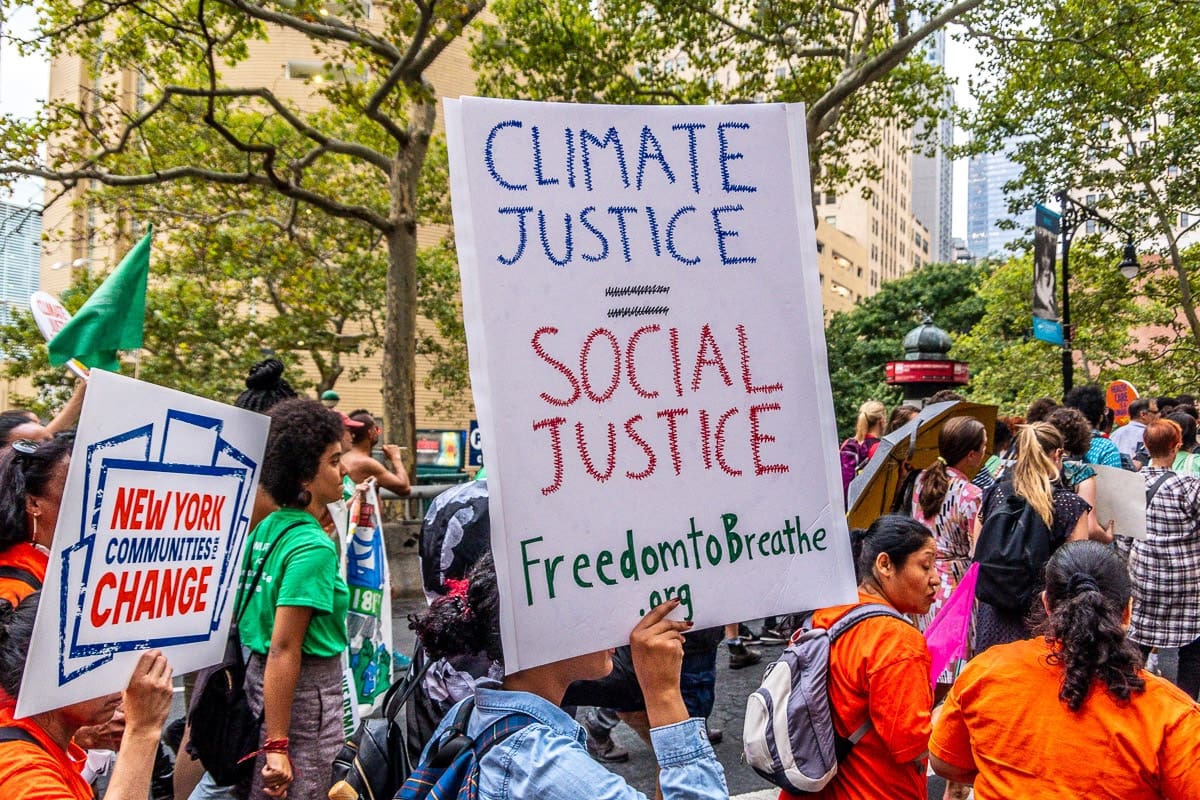
It has become impossible to ignore that global sporting events are no longer tenable in a world beset by environmental crises and political unrest.
The 2026 World Cup is set to have an overall carbon footprint of nine million tonnes, equivalent to six million cars being driven for a year, with fans taking the longest and most carbon-intensive journeys ever for a major tournament.
The planet is already hurtling towards that 1.5℃ global temperature increase limit set by the Paris Agreement, and FIFA’s decision to increase the tournament to its largest ever, with 48 teams competing across an entire continent, is irresponsible, money-grabbing, short-sighted and selfish.
Any commitment from FIFA towards climate awareness has been made redundant by this tournament, which could see an England fan create the same amount of carbon needed to heat a home for 19 months by simply attending every England game if they reach the final.
It has made watching the matches this summer a personal moral dilemma; I re-use and recycle fastidiously, live a low-waste, plant-based lifestyle and, normally, I love the football.
Tuning in this summer will leave a bitter taste of climate guilt in my mouth and, for the first time in my life, I am considering a personal boycott of the games.
FIFA show no remorse heading forward however, with plans for the 2030 tournament to bounce between Morocco, Spain, Portugal, Argentina, Uruguay and Paraguay, and the 2034 Saudi Arabia edition set to take place in 11 stadia which currently do not exist.
Climate change will continue to disproportionately affect the world’s poorest people, and the continued disregard for an increasingly unjustifiable carbon spend means that FIFA could be seen to have blood on its hands yet again.
The cost of human life of the World Cup could be far more tangible however, as ICE agents will be part of the overall security apparatus across the tournament.
Amnesty has said that this tournament is “a stage for repression and a platform for authoritarian practices,” and as someone who watched ICE killings in cold blood on the internet earlier this year, I am inclined to agree.
Trump’s America is a country of mass migrant concentration camps, right-wing governance, and an increasingly militarised police.
ICE’s abusive and discriminatory immigration enforcement must not be swept under the rug, hidden under the heady excitement of a World Cup summer.
Even FIFA, who granted Trump a Peace Prize at the World Cup draw, has acknowledged the danger his regime poses to already marginalised fans, reportedly asking for a moratorium on ICE raids during the tournament.
Even that is uncomfortable, there is an implied permission that the violence can resume as soon as it’s not FIFA’s responsibility : it’s an example of sportswashing at its finest.
It’s an added layer of personal difficulty, I am staunchly against the extremist freefall that America is currently in, and I know that while the teams battle for the top spot, thousands in detention centres and marginalised communities will continue to suffer.
Deep down I know it’s wrong to watch this World Cup, I know that I will betray many of my strongly-held moral beliefs if I do.
But, I love football, I love England, I love the World Cup.
While I don’t know which is going to win out in my personal struggle, I honestly cannot promise that I won’t tune in to at least a game or two.