For one noble advocate, several years of her life have been dedicated to liberating women from the toxic tradition of female genital mutilation. Notably, Sarah’s persistent advocacy led to the enforcement of a new FGM act.
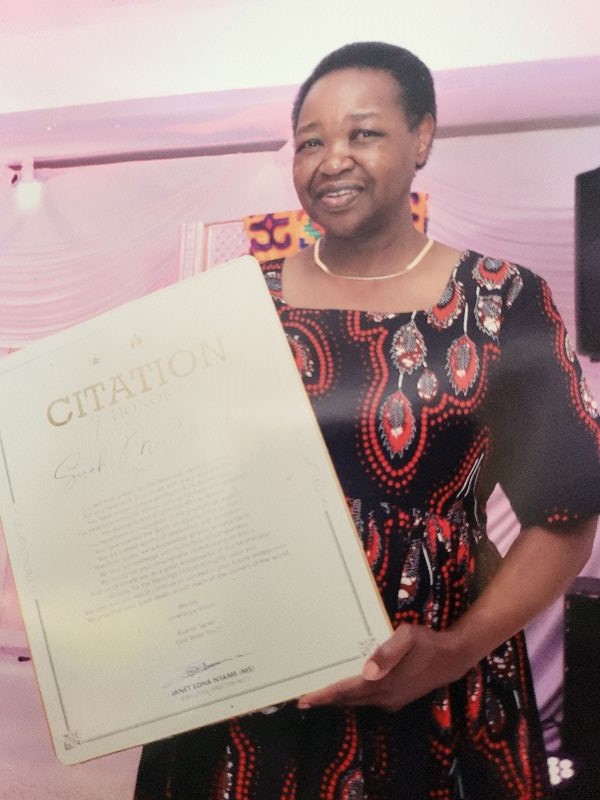
Sarah McCulloch, 70, from Bedfordshire, founded the Agency for Culture and Change Management (ACCM). For most of her life, she has prioritised cultivating change to shift the narrative of Female genital mutilation (FGM).
“Female genital mutilation is about honour; many cultures believe if you’ve been circumcised, then you have honour, the community respects you, and if you don’t get circumcised, you can be dishonoured by the family.
“FGM was started centuries ago by men who thought that women were too promiscuous, ” says Sarah.
Her journey in empowering women and preserving their human rights has been fruitful. However, it has not been easy to encourage women to rethink their deeply embedded harmful cultural practices.
FGM, by definition, is the cutting of the vulva for non-medical reasons.
This practice is perceived by several women in different cultures as a rite of passage, a necessity for being considered pure.
Its cultural roots stem from centuries and are practised in several regions of Africa and some countries in the Middle East and Asia.
What inspired Sarah’s journey to liberate these women was a documentary on Channel 4 which highlighted a city where communities were circumcising their daughters.
“I started talking to Somali women and I was horrified with what I heard, I just thought it was barbaric.
“So I decided to set up ACCM. I started looking into this practice to find those who had been through it. The women I was talking to seemed to have physical and psychological health problems. I wanted to find out how to tackle this and stop this happening to girls and women,” says Sarah.
It was a battle to make such huge shifts due to female genital mutilation being considered a necessity and normalised in several communities.
Despite these hardships and being criticised for challenging so-called cultural traditions that had been ingrained in these communities, Sarah was persistent in protecting women.
READ MORE
- How one Moroccan advocate sparked change across London
- The designer handcrafting dolls that represent black culture
“It wasn’t easy. I got abuse, threats, with people that thought they were protecting their culture, but I just carried on.
We spoke to different communities, we set up an FGM clinic in Sheffield through the NHS to help start treating the women, women started to come forward,” says Sarah.
In 2000 Sarah highlighted the case of a family taking their daughter abroad to have FGM performed on her. This triggered the beginning of Sarah’s pivotal advocacy to change the law.
The circumcision only covered FGM in in the UK. Sarah and her team encouraged a government member to change the law to be more effective and were successful in doing so.
Sarah herself was a member on the panel and was joyed to see that a new act had been enforced, creating tighter laws on FGM that would prevent it happening as frequently.
Sarah connected with the women in these communities and educated them on the physical and mental harms of FGM and its roots.
“We also came across that some of these women were in forced marriages, we discovered that some of them were child brides, we came across honor based violence.
“I continued doing this work because I’m really passionate about it,” says Sarah.
Upon moving across the UK, she encountered more and more diverse cultural communities that performed FGM on women and girls.
“We’ve done a lot of work around the UK and now some communities are not doing it because they see that they’ll be sent to prison and that they could lose their children.
“Young people now are aware of the issues and they’re challenging their families.
“Hopefully more change will come, it’s taking time but it’s on the way,” says Sarah.
With advocates like Sarah, there can be hope for the future generations of women and young girls to thrive in communities that no longer conform to such ideologies.
Putting an end to FGM begins with unveiling the truth behind traditions which have been upheld and maintained in cultures for so long, but it can be done.