
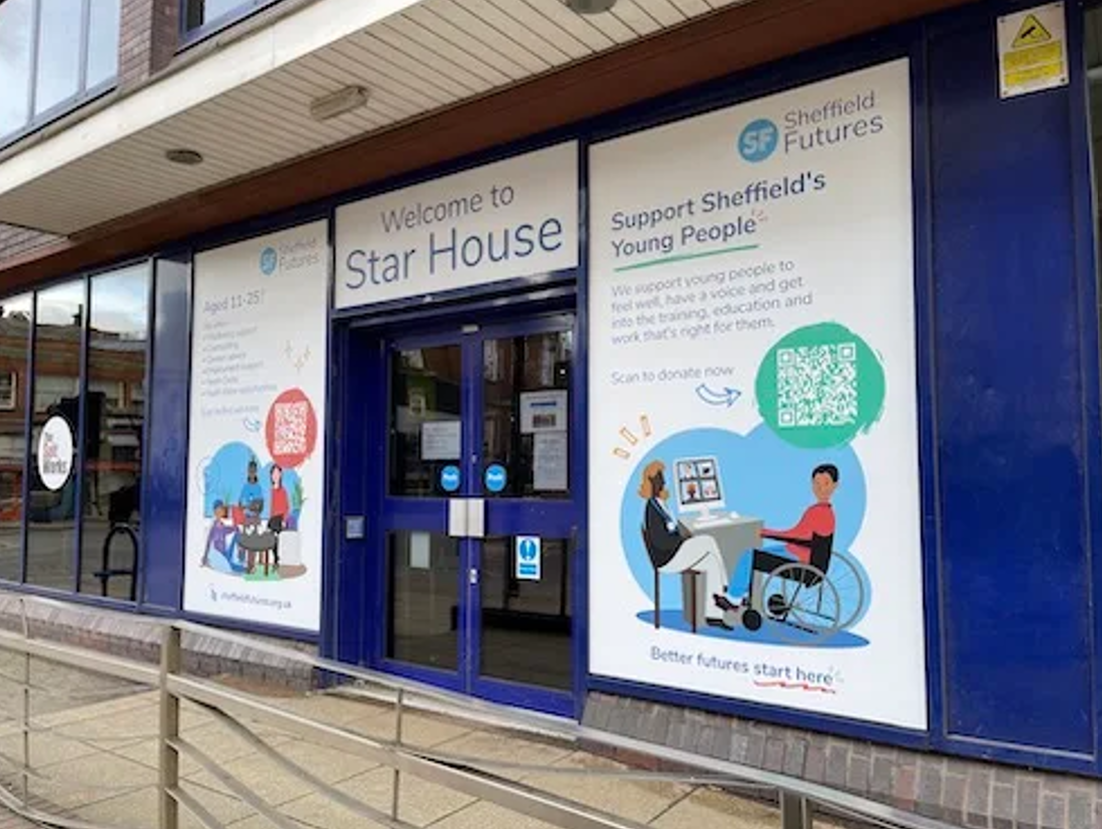
Following October’s Childhood Lottery report and the impending Alan Milburn report into youth unemployment expected later this month, a Sheffield-based youth charity has spoken on the barriers young people face when finding employment and education.
Sheffield Futures works with young people to build confidence and access educational opportunties to find employment and future pathways that work for them.
Speaking on barriers that prevent young people from accessing training, education and employment, Executive Director of Services Christos Louca said: “One of the biggest challenges is the shortage of accessible entry-level opportunities for young people.
“Over recent years we have seen reudctions in apprenticeships, traineeships and some training provision, which means many young people are competing for a limited number of opportunities.”
Mr Louca continued by noting the increasing pressures schools and colleges face, which can impact the careers support they have to offer.
“Many young people leave education without a clear understanding of the opportunities available to them, the pathways they could pursue, or the practical steps needed to achieve their goals.”
According to the Office for National Statistics, an estimated 13.5% of all people aged 16 to 24 years in the UK were not in education, employment or training (NEET) in January to March 2026. Number wise, this equals just over a million.
The Government has set out a number of strategies to try and tackle this rising statistic, including setting up support for councils to identify and support vulnerable teenagers who are at risk of becoming NEET. This includes teenagers with mental health needs, special educational needs and those with poor school attendance.
According to Mr Louca, young people who fall into those categories face greater disadvantages when trying to access opportunities due to a range of different factors.
He said: “Neurodivergent young people, including those with autism or ADHD, can face additional challenged when opportunities are not designed with accessibility in mind.
“Recruitment processes, training environments and workplace expectations do not always provide the reasonable adjustments needed to enable meaningful participation and success.”
He added that care leavers and young people disengaged from education also face greater disadvantages, largely due to a lack of family networks, financial support and other support services.
South Yorkshire had some of the lowest rankings in education and employability catergories included in the Childhood Lottery report, with data compiled by The Observer ranking Sheffield 144th out of 149 for education and jobs.
Sheffield Futures is one of many youth-orientated organisations working to improve confidence amongst young people by targetting them with individual support that’s youth-led and holistic. This includes counselling services, employability coaching and a wellbeing cafe.
Mr Louca says that young people who use Sheffield Futures’ services make significant progress in their personal development and future prospects.
He said: “Many report increased confidence and self-esteem, improved mental wellbeing and stronger social connections.
“For some, the biggest change is developing a sense of purpose and belief in their own abilities. For others, it is gaining the practical coping strategies to manage their emotions or practical skills and confidence needed to apply for a course, attend an interview, start employment or return to education.”
Many reports say that the rising number of NEETs is deeper than just young people not wanting to work – it can be attributed to wider structual problems, such as rising costs for employers leading to them not wanting to employ apprentices and a welfare system that makes accessing support and treatment a harder route than inactivity.
Mr Louca emphasised that young people are often misunderstood as lacking in motivation, but that instead the issue is a lot more complex.
He said: “Young people today are often expected to make major decisions about their futures whilst managing social, economic and personal challenges that can be difficult to overcome without support.
“Rather than a lack of motivation, we more commonly see a lack of opportunity, information or confidence. When young people are given the right support, encouragement and access to opportunities, they consistently demonstrate ambition, resilience and a desire to succeed.”
He continued by saying that one of the biggest challenges faced by Sheffield Futures is that they often operate through short term contracts and funding arrangements, meaning its difficult to provide long-term support to those who need it.
Mr Louca said: “Young people who have experienced significant disadvantage often require consistent relationships and support over a number of years.
“Short-term commissioning can therefore limit innovation, continuity and the ability to respond flexibly to emerging needs, ultimately making it harder to achieve the lasting outcomes that both young people and communties deserve.”
You can find out more about Sheffield Futures by visiting their website.