

Health Secretary Wes Streeting promised “actions, not words” in tackling medical misogyny last week after meeting television presenter Vicky Pattison, who has been lobbying for better treatment for women following her struggle with premenstrual dysphoric disorder (PMDD).
The pledge was welcomed by campaigners for women’s reproductive health, but others say the focus remains too narrow. For those living with chronic conditions outside gynaecological care, the promise rings hollow.
Living with ME
For 58-year-old Nicky Proctor, even short trips out of the house can leave her bedridden for days. “After I crash, I’m in the house in my pyjamas all the time, in bed or on the sofa,” she says. “I can’t do any physical activity now. It’s a very debilitating illness.”
Once a keen triathlete, Mrs Proctor said she spent ten years being told nothing was wrong before finally being diagnosed with myalgic encephalomyelitis, or ME. “I was given antidepressants and told it was depression,” she says. “No medical person ever mentioned ME which just shows the lack of education among healthcare professionals about this illness.”
A Hidden Illness
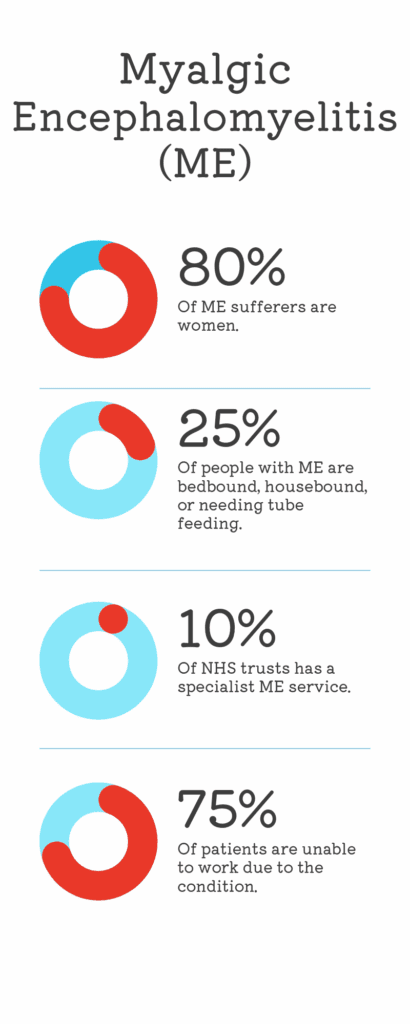
ME is a complex neurological condition affecting an estimated 404,000 people in the UK. Around 80 per cent of those diagnosed are women, and studies suggest they are nearly four times more likely to develop the illness than men. Three-quarters of patients are unable to work, while one in four are severely affected, often housebound or bedbound with extreme fatigue, pain, and sensitivity to light and sound.
Her symptoms, she explains, affect almost every part of daily life. “It’s not just fatigue,” she says. “It’s muscle pain, headaches, nausea, and sensitivity to light and sound. There have been some days where I couldn’t even watch television or read because it made me feel worse.”
Three years after her diagnosis, she is still waiting for meaningful support. “Seventy-five per cent of people with ME can’t work, and 25 per cent are really seriously affected, bed bound, tube fed, unable to stand light or sound,” she says. “There’s no provision on the NHS for severe ME.”
“All Words, No Action”
Mrs Proctor became involved with Forward-ME, a coalition of charities working with the government on its Delivery Plan for ME. But she said the final report, published in July, fell far short of what patients were promised. “It talks about the importance of smart objectives, and then it proceeds to not give any,” she says. “There are very few timings. There’s no accountability. It just plays into the theme of all words, no action.”
Calls for Systemic Change
York Central MP Rachael Maskell, who sits on the All-Party Parliamentary Group on ME, said the neglect of women with the condition reflects a broader pattern of systemic bias in medicine.
“We have to acknowledge that women’s health care experiences have failed to reach the highest standards, and that goes beyond reproductive health,” she said. “We have to mainstream a gender focus on all areas of health care and ensure women receive the prevention, early interventions, management and care that enables them to optimise their health outcomes.
“Only by co-producing a women’s health strategy with leading clinicians and people with lived experience, and ensuring the Care Quality Commission has powers to scrutinise gendered health delivery, will we start to see real change.”
For Mrs Proctor, the promises from Westminster still feel distant. “I’m very frustrated,” she says. “It’s all words, no action.”