
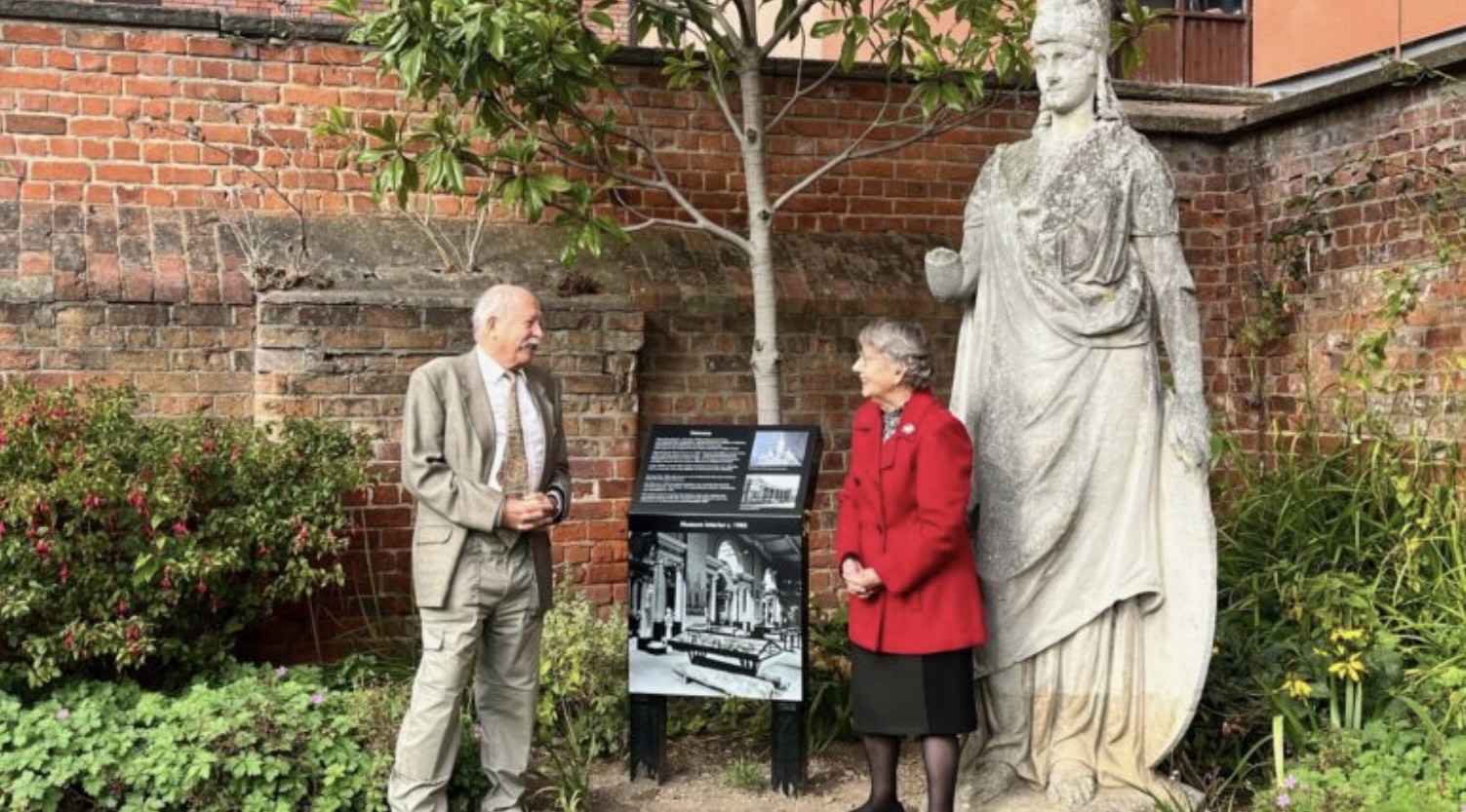
A plaque was unveiled to celebrate 200 years of the Hull Literary and Philosophical Society’s contribution to the city’s culture.
People gathered in the Museums Quarter yesterday afternoon to watch Councillor Rob Pritchard unveil the special plaque.
A plaque commemorating the Hull Literary and Philosophical Society’s role in the cultural and educational history of the city over 200 years was unveiled today at the Museums Quarter. pic.twitter.com/Xdg9JmbEL1
— Hull City Council (@Hullccnews) October 9, 2025
Cllr Pritchard, Portfolio holder for culture & leisure at Hull City Council said: “It is a great honour to unveil this plaque, celebrating the great contribution of the Literature & Philosophical Society in Hull over many years.
“I hope it will act to spark further interest in the society with visitors to the Museums Quarter.”
The Hull Literary and Philosophical Society has played a significant role in promoting literature, philosophy, and education in Hull since 1822, when it was founded.
The society has made significant contributions to community and culture in the city, it’s achievement’s include; funding the construction of a teaching laboratory and provided classrooms for technical subjects and art.
They’ve also sponsored a branch of the Cambridge University Extension Society and was involved in the establishment of Hull’s first Art Gallery above its museum.
Margaret Imrie, from the Literary and Philosophical Society said: “This is the fulfilment of a long-cherished hope. The plaque recognises all the work we’ve done over more than 200 years to bring learning to the people of Hull.
“This ensures that visitors will understand the significance of the statues and what the Hull Literature & Philosophical Society has achieved in the city.”
The plaque is located in front of three figures depicting Minerva in the Museums Quarter Gardens, that once stood on the pediment of the Royal Institution building in Albion Street, which was the home of the society from 1854 to 1943.
The carvings were created by Hull Sculptor, William Day Keyworth jnr.
They were moved to the Museum’s Quarter gardens after the Royal Institution was destroyed by fire in 1943 during a bombing raid on the city in the Second World War.
Today, the society hopes to continue promoting knowledge and culture in Hull for the future.